| Distribution |
Germany, United States, United Kingdom, Korea |
| Characteristics |
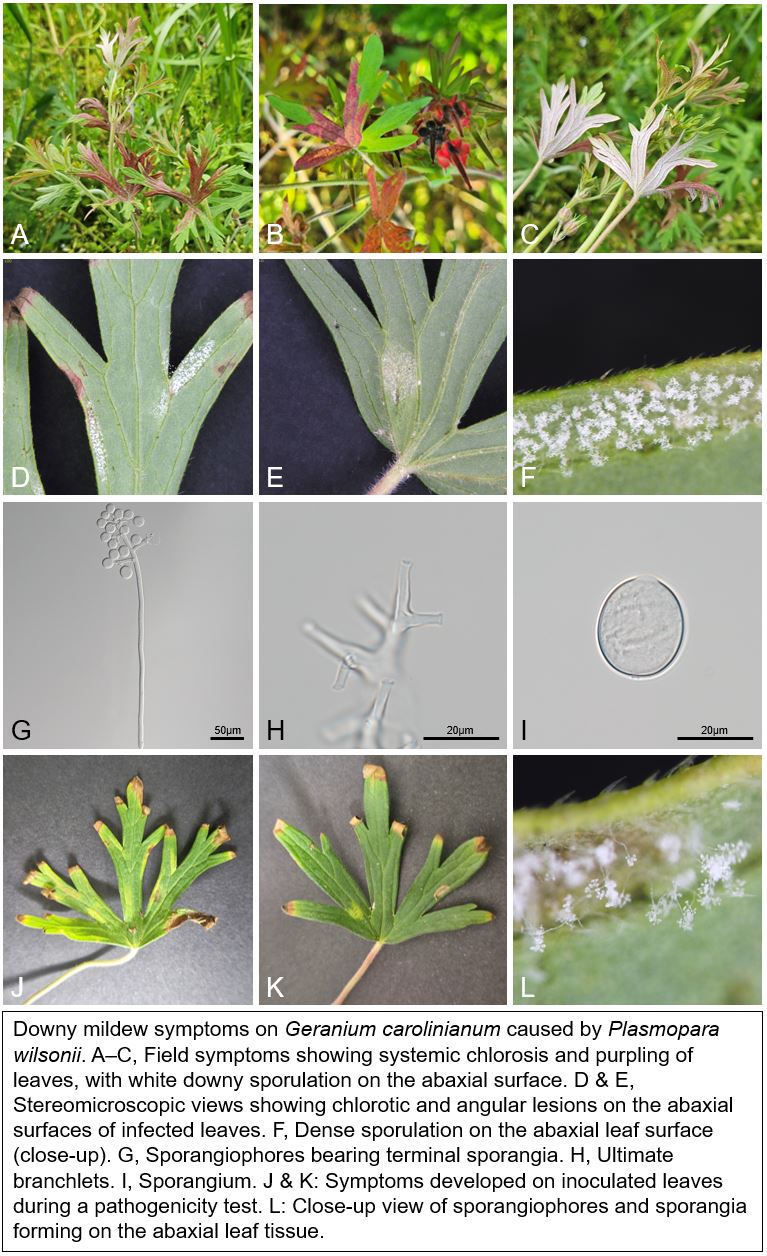
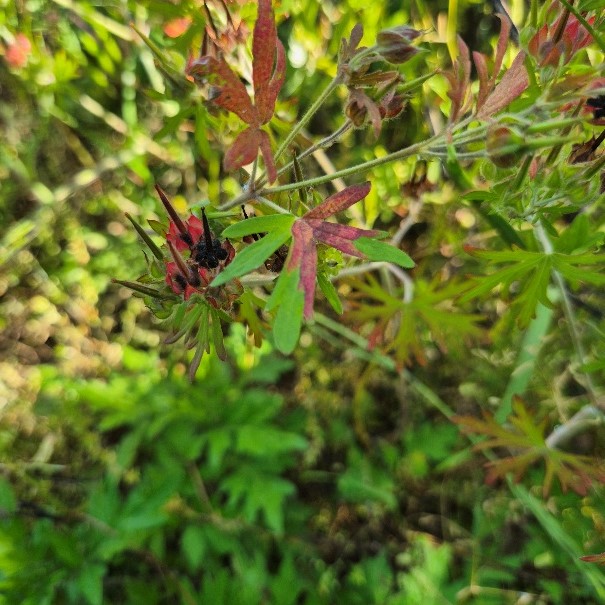
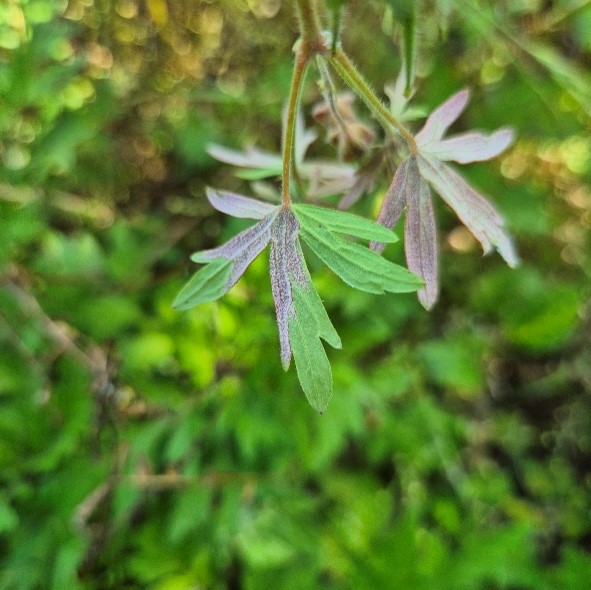
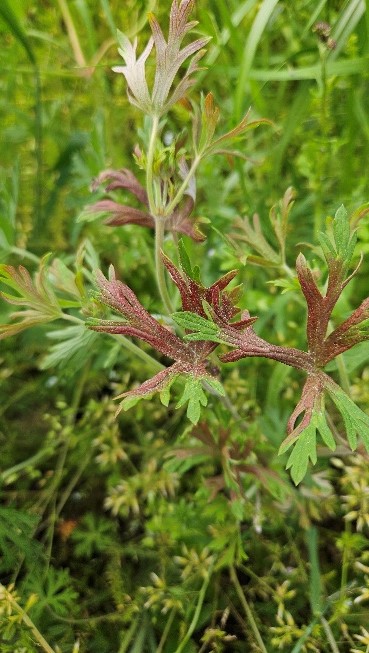
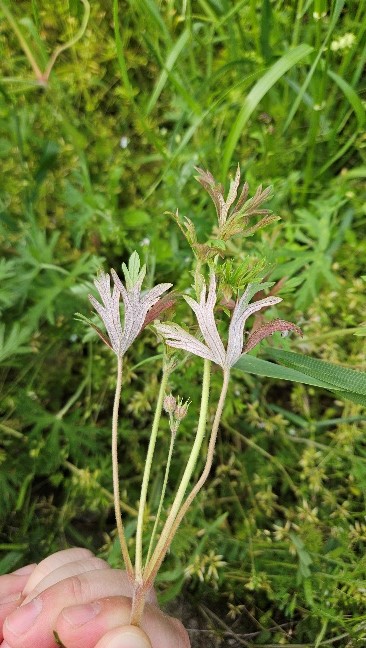
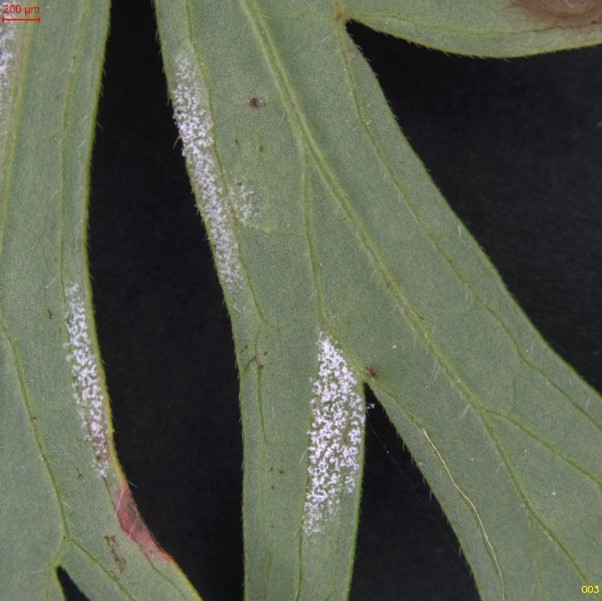
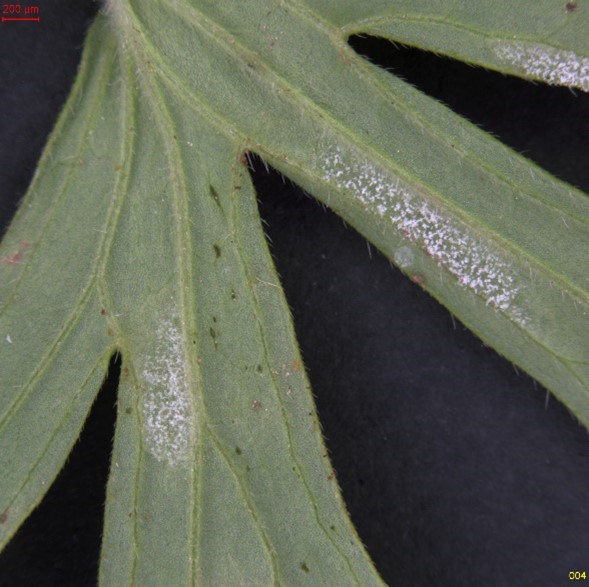
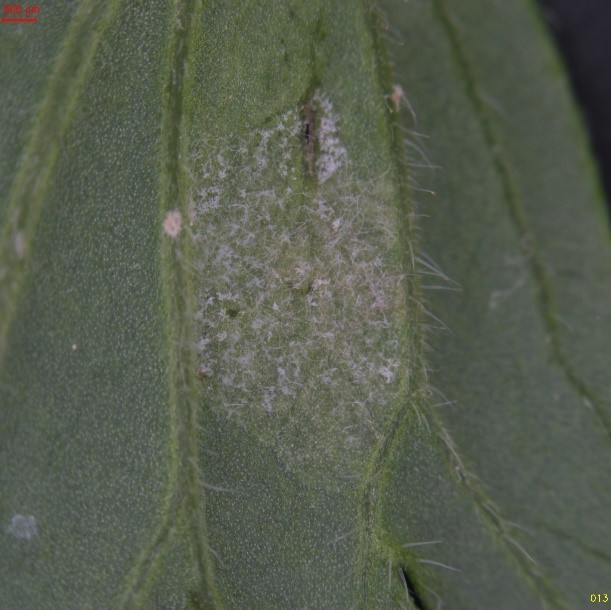
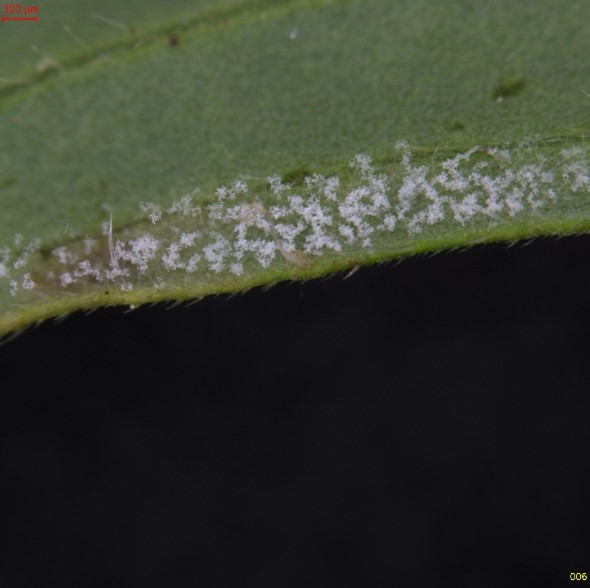
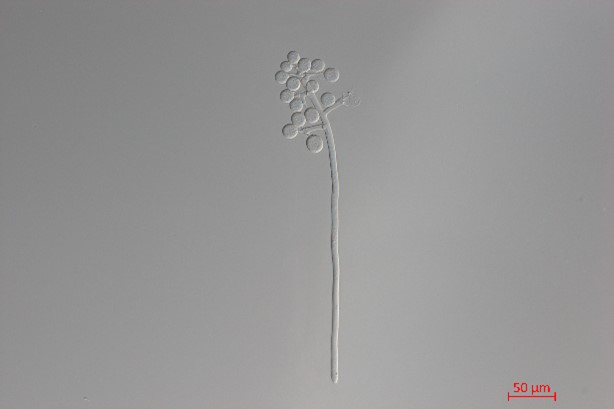
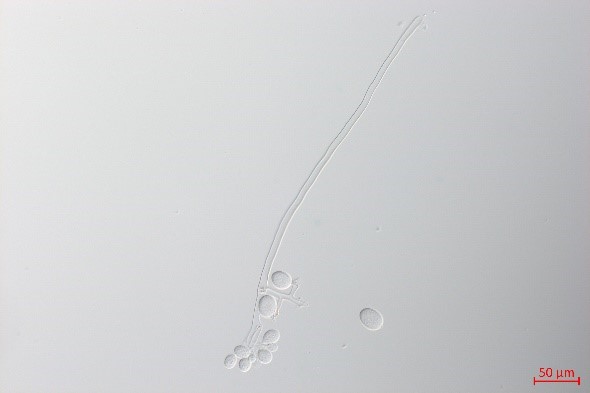
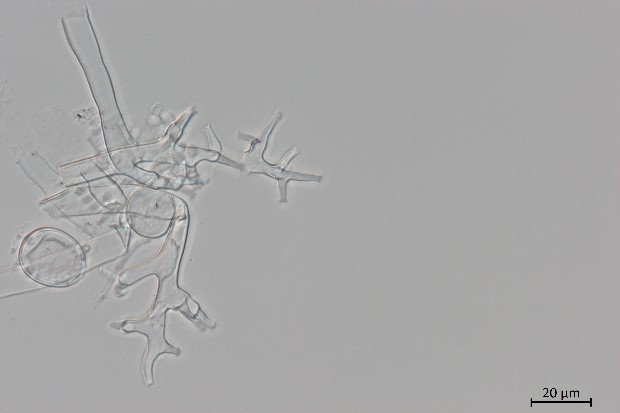
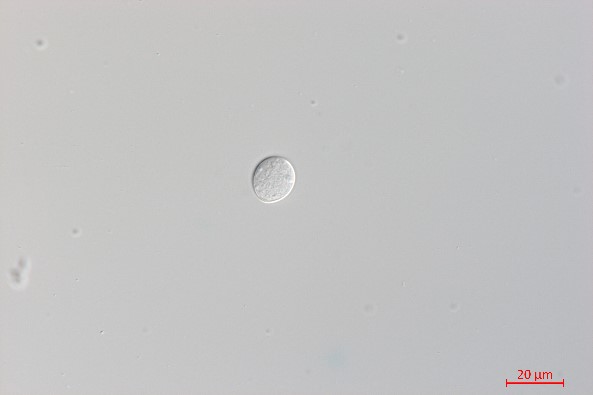
Lesions on leaves causing slight discoloration of the tissues to clearly defined epiphyllous spots; spots first pale yellowish, later becoming reddish-brown, polyangular, or covering the whole leaf surface, vein limited; attacked tissues becoming necrotic. Down hypophyllous, white to greyish, dense, felt-like. Haustoria filling the host cell partly, obpyriform or flask-shaped, 4-7 μm diam., with a wide stalk at the part of entry into the host cell, surrounded by thick sheaths. Sporangiophores subhyaline, slender, 120-360 μm long; trunk straight or slightly curved, 100-250 μm long, of more or less uniform width, base not or somewhat swollen, 5-12 μm above the base, 5-10 µm wide below the first branch, callose plugs often present, 1-2(-4) along the trunk; branches arising at variable angle less than right to the main axis, monopodial, of 2 to 5 orders, sometimes appearing subdichotomous; callose plugs occasionally present. Ultimate branchlets rarely differentiated into an axial (usually longer) and abaxial ones, straight to substraight, 12-17 μm when axial, 5-12 when abaxial, 2-3 μm at the base, 1-1.5 μm just below the tip, tip round or cup-like, but mostly swollen ca 2 3 μm diam. Sporangia broadly ellipsoidal to ellipsoidal, rarely ovoidal or almost oblong, 16-34 μm long, 15-23 μm wide, l/w ratio 1.1-1.6 (n=150), greatest width median or sub-median, rarely supra-median, base and tip round, apical dehiscence apparatus 3-5 μm diam., pedicel absent or slightly protruding. Zoospores releasing through apical pore. Resting organ not seen. |
| Notes |
Four epithets of Plasmopara parasitic on Geranium spp. have been recorded up to now, among which three species, viz. Pl. pusilla, Pl. geranii-sylvatici, and Pl. geranii, were considered nomenclaturally valid (Constantinescu, 2004). In Korea, a downy mildew from Geranium spp. was first reported in our previous study (Shin & Choi, 2003) as undetermined Plasmopara sp. Korean materials diverge from both the Eurasiatic Plasmopara pusilla (de Bary) Schröter and the North American Plasmopara geranii (Peck) Berl. & de Toni, parasitic on other species of Geranium. Therefore, we supposed that it is most probably an undescribed taxon. Recently, Voglmayr et al. (2006) regarded it as new species, Pl. wilsonii, based on molecular and morphological data. They also revised all Plasmopara species on Geraniaceae into five species: Pl. pusilla and Pl. geranii-sylvatici in Asia and Europe, Pl. geranii in North America, Pl. praetermissa in Asia, Europe, and North America, and Pl. wilsonii in North America and Far East Asia. This species is differntiated from other Plasmopara on Geranium by its long and narrow trunk, swollen tip of the ultimate branchlets, and variable size of the sporangia. The sporangia were germinated by zoospores, which are encysted. Germ tube was then formed at random sites of encysted zoospores, and its length was 30-80(-130) μm. In initial stage of germination, the width of germ tube was narrow (0.5-1.5 μm wide), but swelled in the middle and often branched (Choi et al., umpublished). |
| Economic importance |
Carolina geranium is an annual herbaceous plant native to North America and is commonly found in meadows, roadsides, and disturbed habitats. It has naturalized in several temperate regions worldwide. In Korea, Carolina geranium has become established in naturalized and semi-natural habitats and is considered an invasive species due to its rapid spread and competitive displacement of native flora.
Geranium thunbergii is a perennial herb in Korea. It can be found growing wild throughout the countryside. It has been highly esteemed in folk medicine for centuries. The name in Korean means “dysentery herb”, supposing that many people found the plant effective at curing dysentery. Distinct pale green to yellow or sometimes red spots were formed on the upper surface of the infected leaves. A dense layer of sporangiophores and sporangia developed on the lower surface, and clearly vein-limited
|
| References |
- |